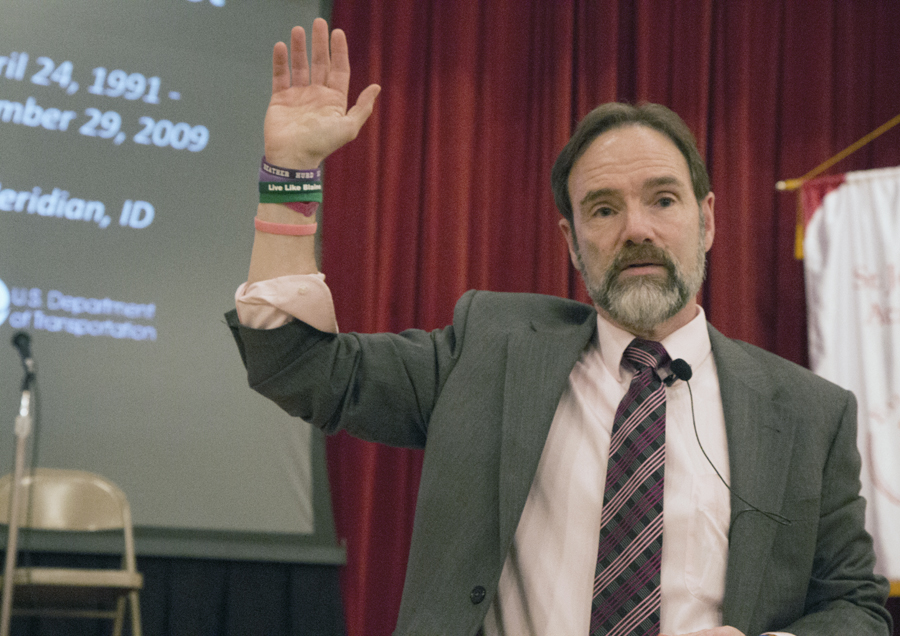
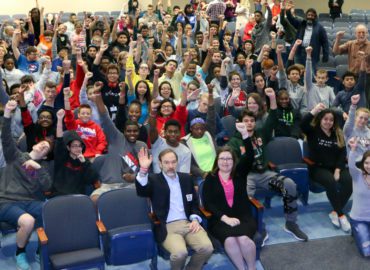
EndDD Reaches Out With A Safety Message

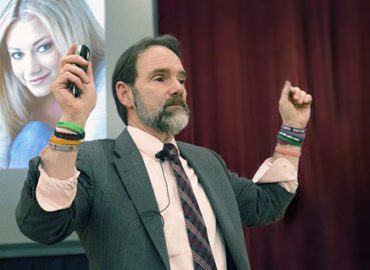
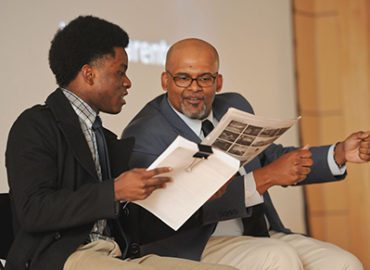
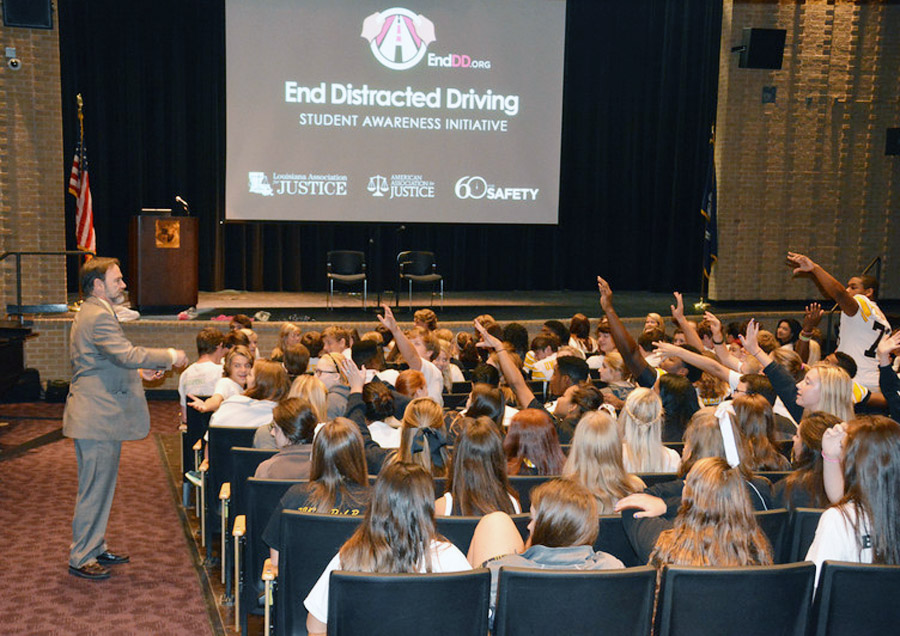
Here is what speakers and students are saying about the presentations...

  • Young people understand, deeply, that cell phone us while driving needs to be "de-normalized" and even stigmatized. Young people want to be supported and encouraged in using their voices to "speakup" to others, including their parents, when they feel unsafe about distracted driving. They need information, support and encouragement from us to do this. —Scott Blumenshine, Esq. Chicago, IL
  • WOW! What a refreshing experience! Today is one of those days where you feel good about what you do and even better about what you have done knowing that you might just have saved a life. The kids were really excited and participation was excellent. For my groups, one of the most rousing responses came when I fessed-up to being a distracted driver in my past. That seemed to lend credibility to the presentation and allowed the kids to open-up. I made the confession in my opening remarks and it was smooth sailing from there. —George Boath, Esq. Stratford CT
  • Feedback from both students and faculty is extremely positive. Several faculty members said the way you delivered the message was great. They felt engaging the students was good and let them express, esp. regarding parents, where they are concerned. They have had close calls and said they would be more aware. I spoke with my students after and in both classes, the general feedback was I never thought about it until now. Thank you so much for coming to Strath Haven. —Debbie Mischo, Strath Haven High School
  • I spoke at Andrew Jackson Senior High in Jacksonville, Florida. One young lady, watching the bus driver filling out papers and driving with his knees, said “My mama does that.”  (Frankly, that surprised me.)   She became my assistant, holding the microphone up to the AV equipment so it could be heard by everyone. The teachers stayed in the auditorium and were very pleased with the level of participation. —Wayne Hoganl, Esq, Jacksonville, FL
  • After the presentation a student came up to me and thanked me for coming to the school. He then shared that his parent had killed someone when driving distracted. He shared his feelings from the perspective of a young man who watched the aftermath of the tragedy his parent caused and indicated how that changed his parent’s driving behaviors and how that has affected this young man—who does not drive distracted now. — Chris Marzzacco, Esq. Harrisburg, PA
  • Went great! [Spoke to] sixty students from the alternative high school. Looking forward to hitting more students later this month when we hit all 5 of the area public and private high schools. The program is certain to change behaviors and the way that people look at distracted driving. We made a definite impact on our students, but I think we also got the attention of the teachers who saw the presentation. Thanks again for your help, and for putting this program together. — Mike Williams, Esq. Fargo, ND
  • I felt when the young drivers were sharing their own poor choices or others they rode with, this was very helpful to the cause—the students were pretty attentive; participated and shared experiences; and were respectful. I wasn’t sure at first if they’d open up, but they did. I should add that the videos about Mr. Feldman’s daughter and the sister speaking of her text to her older sister at the time of a fatal wreck were powerful and made a true impact on the kids. —Tim Pickell, Esq Westwood, Kansas
  • I thought it was a really powerful assembly. She wasn’t there to yell at us, but rather spoke from experience about how terrible distracted driving can be. —Amanda Librizzi, Manasquan NJ

Recent articles about distracted driving:

  • 7580583-father

    Parents: Get involved with your teen drivers

    Dear parents Even though your teenage sons and daughters try to ignore what you say—they still appreciate your guidance. If you lead by good examples, they will follow. Your parenting style can greatly influence as to whether or not your child avoids or takes part in risky behaviors. However, that’s not quite enough. If you don’t talk on the cell phone while driving and don’t text while driving – you will need reasons as well as tools as to why your teens should not be participating in distracted driving behaviors. Here are a few suggestions: Set boundaries and clear expectations vs. the old and trite “do as I say not as I do” speech Ensure they have been exposed to driver education & training Let your teen drivers know you are available for support not criticism and punishment Know where your teens are and who they are with and what time you expect them to be where they say are and back at home Lead by example: Don’t speed. Don’t talk on the cell phone while driving. Don’t engage in distracted driving behaviors like fiddling with the GPS, eating & drinking while driving, etc. Wear your seatbelt at all times. Of course, your teen will have rebuttals for all your safe driving suggestions but hey, you’re the parent, you will have responses to their responses. Kids testing limits is part of growing up, and so is good parenting.

  • Resources for Teen Drivers and Their Parents

    Teen Driver Source is comprised of a team of researchers, educators, and communicators from the Center for Injury Research and Prevention at The Children's Hospital of Philadelphia Research Institute. They use a multidisciplinary approach to study the causes of teen driver-related crashes and then provide evidence-based interventions in order to advance the science of reducing teen driver crashes and their related deaths and injuries. (more...)

Featured Articles

Archives

Categories

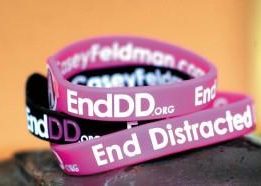
endDD Pledges

EndDD has received 58 pledges to end distracted driving.

"I will focus on driving and safety of others rather than the hustle and bustle of society."
— James M. Freeman,PA